Nettlework
In memory of Marie Baten
Nettlework is a memorial for the witchhunts in Peelland, with the stinging nettle as translator of our history. I was raised with the stories about witches, and in my research I came across the depth and impact of what happened in these towns. Most of the women who were prosecuted worked from home as spinners and weavers for the local textile industry, their position as homeworkers made them more vulnerable for these trials. This history brings me to the exploration of natural textiles and storytelling.
I grew up at the Kasteelweg in Mierlo, a Dutch town part of region Peelland. As the street name refers to: there used to be castle here. In 1595 the lord that lived in this castle, Erasmus van Grevenbroeck, started a witch hunt. Starting with prosecution of Marie Baten the witch trials traveled through the surrounding towns. Within 3 months 28 women were prosecuted. The trials started in the castle, often followed by the water test in the river, and eventually brought the woman to the Hoenderboom at the Strabrechts heath where they were burned.
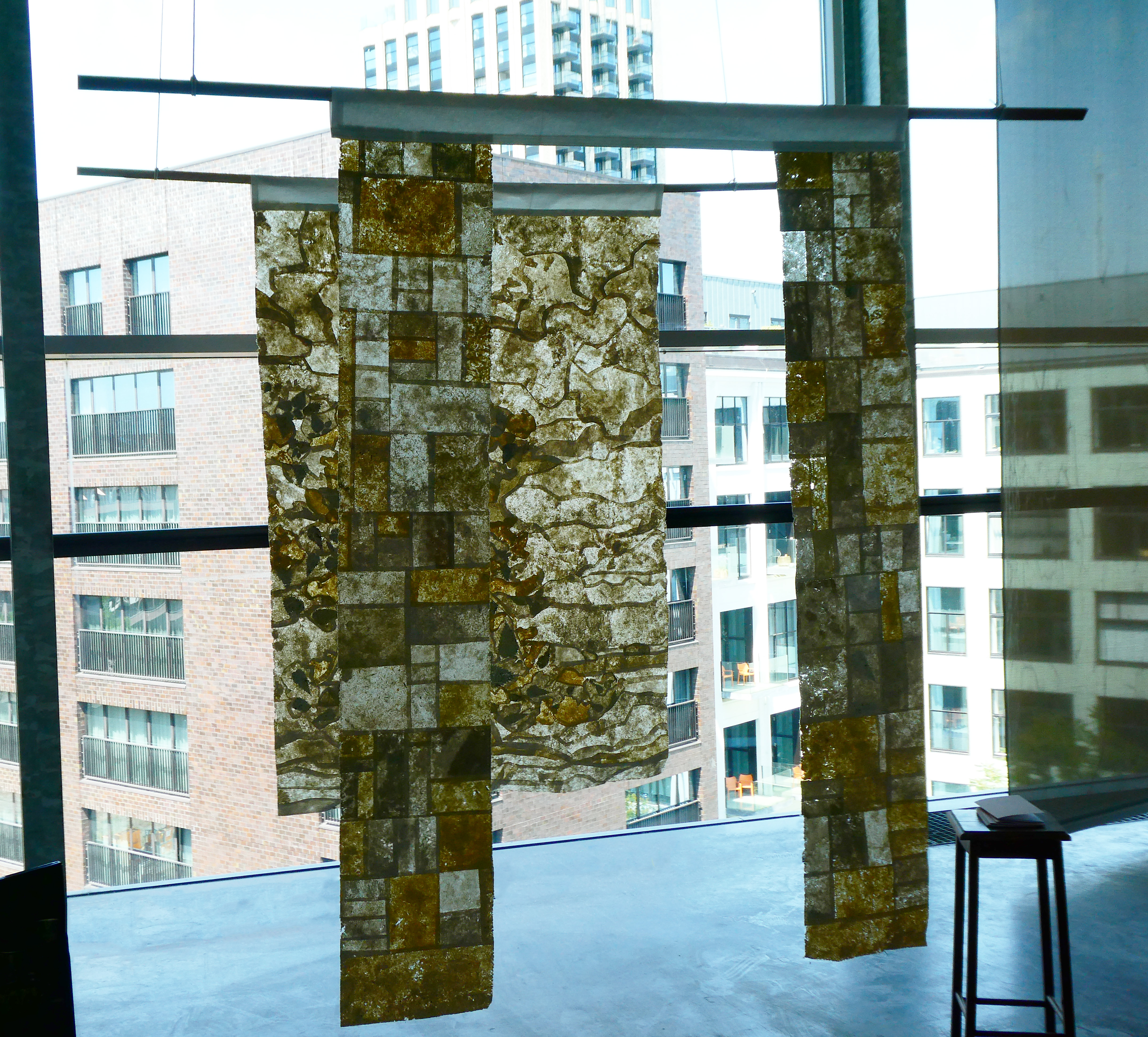
The stinging nettle is a plant we avoid, consider as a weed and is even hated. However, we overlook its medicinal properties, its strong fibers and the knowledge it carries. I used its fibers to make paper. By patchworking I create the image of the Hoenderboom, the place of execution. Before it hang 2 pillars, they refer to the gate of the castle, the last part of the ruin that was destroyed in 1948. Together they form a space of silence and resilience. When the light shines through the work the leaves of the nettle become visible, telling the story of what happened to many prosecuted women.
2025
In memory of Marie Baten
Nettlework is a memorial for the witchhunts in Peelland, with the stinging nettle as translator of our history. I was raised with the stories about witches, and in my research I came across the depth and impact of what happened in these towns. Most of the women who were prosecuted worked from home as spinners and weavers for the local textile industry, their position as homeworkers made them more vulnerable for these trials. This history brings me to the exploration of natural textiles and storytelling.
I grew up at the Kasteelweg in Mierlo, a Dutch town part of region Peelland. As the street name refers to: there used to be castle here. In 1595 the lord that lived in this castle, Erasmus van Grevenbroeck, started a witch hunt. Starting with prosecution of Marie Baten the witch trials traveled through the surrounding towns. Within 3 months 28 women were prosecuted. The trials started in the castle, often followed by the water test in the river, and eventually brought the woman to the Hoenderboom at the Strabrechts heath where they were burned.
The stinging nettle is a plant we avoid, consider as a weed and is even hated. However, we overlook its medicinal properties, its strong fibers and the knowledge it carries. I used its fibers to make paper. By patchworking I create the image of the Hoenderboom, the place of execution. Before it hang 2 pillars, they refer to the gate of the castle, the last part of the ruin that was destroyed in 1948. Together they form a space of silence and resilience. When the light shines through the work the leaves of the nettle become visible, telling the story of what happened to many prosecuted women.
2025
Eco-nomads
Collecting friend, land and tent
Can humans play a responsible part of a natural ecosystem?
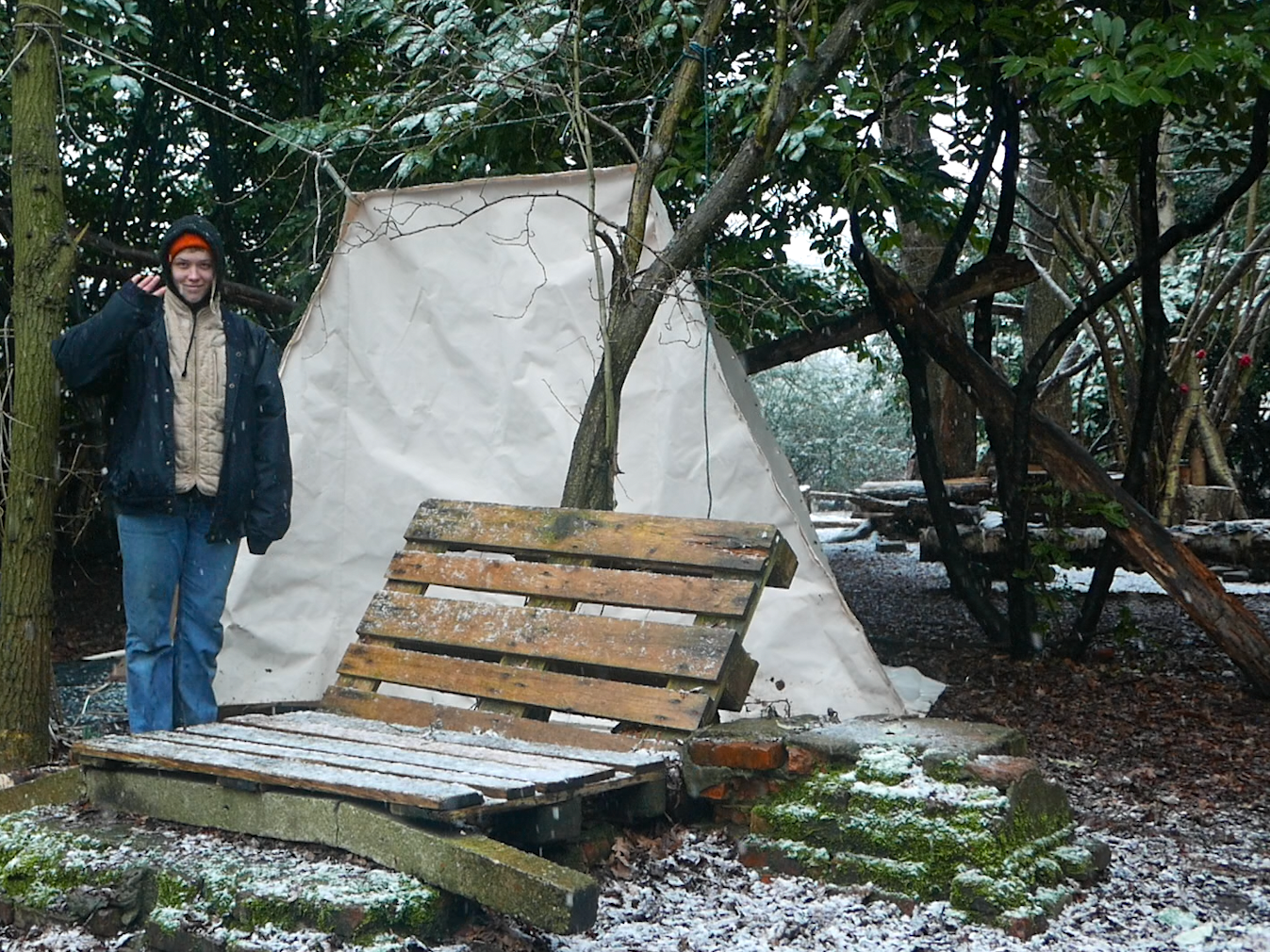
I believe the answer to this question lays in combining community (friend), understanding of ecology (land) and reshaping the relation we have with our houses (tent). To bring the possibility for housing in the hands of the people, questioning ownership of land and space. Eco-nomads presents the tool to build your own tent and provides information on nomadic lifestyle, as well as tutorials like how to build your own toilet or how to start a garden.
The zine is a collection of philosophies, try-outs and designs. This open-source format invites you to take a zine with you on the search for your ways of living, and fill the zine with your findings. In this way the project is not just mine, but from everyone who wants to contribute and learn.
2024
Collecting friend, land and tent
Can humans play a responsible part of a natural ecosystem?
I believe the answer to this question lays in combining community (friend), understanding of ecology (land) and reshaping the relation we have with our houses (tent). To bring the possibility for housing in the hands of the people, questioning ownership of land and space. Eco-nomads presents the tool to build your own tent and provides information on nomadic lifestyle, as well as tutorials like how to build your own toilet or how to start a garden.
The zine is a collection of philosophies, try-outs and designs. This open-source format invites you to take a zine with you on the search for your ways of living, and fill the zine with your findings. In this way the project is not just mine, but from everyone who wants to contribute and learn.
2024
Fertili-tea
In memory of Marie Baten
Fertili-tea presents a collection of medicinal tea for reproduction health.
In my search to strengthen the connection with the land I grew up at, I managed to dig up its history from under the soil. The foundations of the castle are still sleeping here and tell us the story of 5 woman. Accused of witchcraft by the owner of the town, they were prosecuted at the castle in 1595.
The tea functions as a catalyzer for the conversation around reproduction rights.
2024
In memory of Marie Baten
Fertili-tea presents a collection of medicinal tea for reproduction health.
In my search to strengthen the connection with the land I grew up at, I managed to dig up its history from under the soil. The foundations of the castle are still sleeping here and tell us the story of 5 woman. Accused of witchcraft by the owner of the town, they were prosecuted at the castle in 1595.
The tea functions as a catalyzer for the conversation around reproduction rights.
2024

Eco-textiles
in memory of Marie Baten
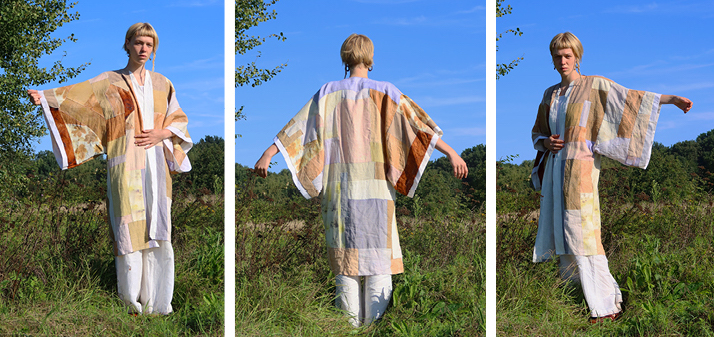
Marie Baten is the first woman in my hometown Mierlo that was accused of Witchcraft. September 1595 she was prosecuted at the castle of Mierlo, in the street where I grew up. Over 400 years later I collect the stinging nettles growing on the land as a first step to create the concept of a textile forest. Here the plants, soil, animals, and humans work together in one ecosystem to tap into a new form of textile farming. From the materials I created clothing suitable for rituals and to work on the land, to strengthen our connection with nature and knowledge that was lost.
2023
in memory of Marie Baten
Marie Baten is the first woman in my hometown Mierlo that was accused of Witchcraft. September 1595 she was prosecuted at the castle of Mierlo, in the street where I grew up. Over 400 years later I collect the stinging nettles growing on the land as a first step to create the concept of a textile forest. Here the plants, soil, animals, and humans work together in one ecosystem to tap into a new form of textile farming. From the materials I created clothing suitable for rituals and to work on the land, to strengthen our connection with nature and knowledge that was lost.
2023